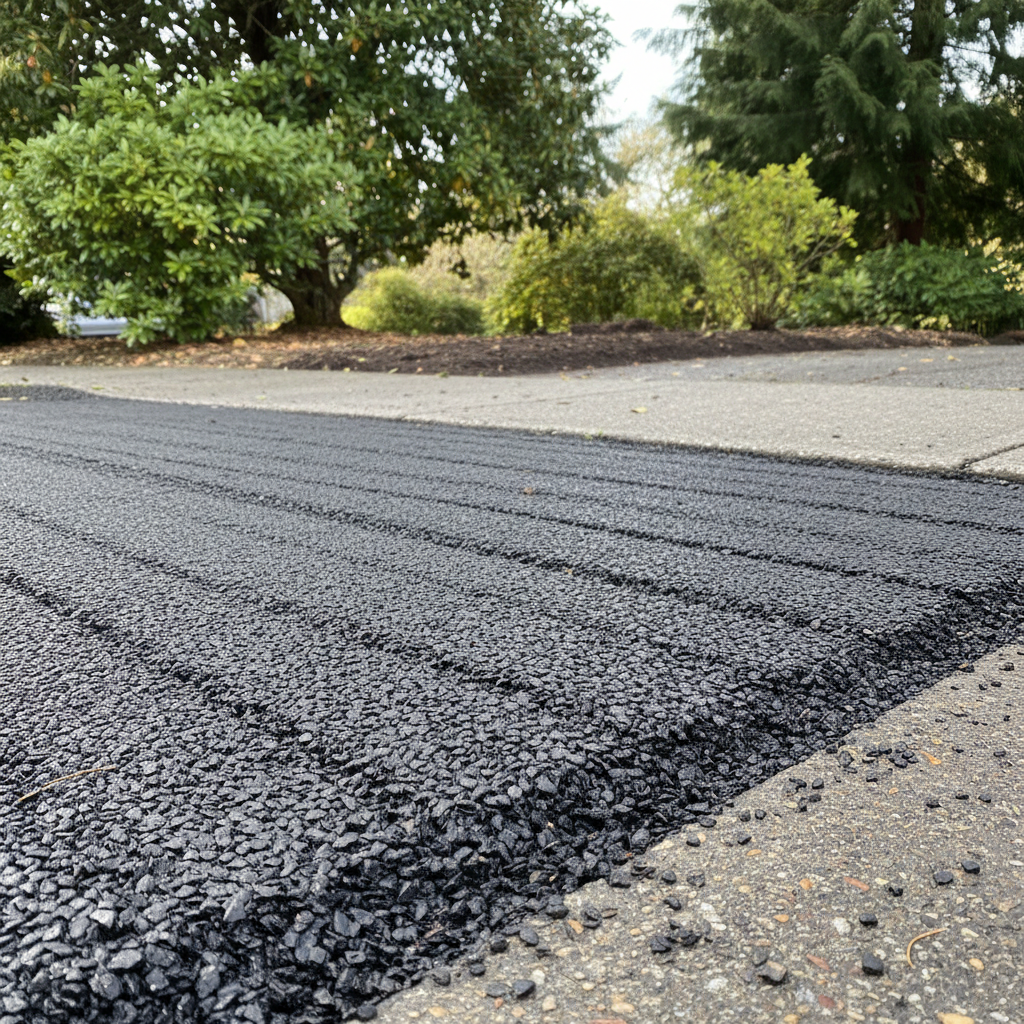
Alright, let's talk about asphalt milling. You might've heard the term, maybe seen those big machines chewing up old pavement on the roads around Seattle, or maybe you're just looking at your cracked-up driveway and wondering what your options are besides a full tear-out.
Milling, sometimes called 'cold planing' or 'asphalt recycling,' is basically grinding down the top layer of your existing asphalt. It's not a full replacement, and it's not just an overlay. It's a specific process that can save you a lot of money and still give you a great result, especially if your driveway's got some life left in it but needs a serious refresh.
Why Consider Asphalt Milling?
You're probably asking, why mill instead of just paving over it or ripping it all out? Good question. Here's the deal:
- Cost Savings: This is a big one. Milling is usually cheaper than a full tear-out and replacement because you're reusing some of the existing material. You're not paying for as much new asphalt, and you're not paying as much for disposal.
- Structural Integrity: If your base layer is still solid, but the top layer is just shot – cracks, potholes, uneven spots – milling can fix that surface without disturbing a good foundation.
- Grade Control: Sometimes you need to lower the grade of your driveway for drainage, or to meet a new garage slab height. Milling allows you to precisely remove a certain depth of material. This is especially useful in areas like West Seattle where slopes and water runoff are always a consideration.
- Environmental Benefits: You're recycling. The milled asphalt can often be reused as aggregate in new asphalt mixes or as a base material. That's a win for the planet.
Before the Project: Planning and Prep
This is where you, the homeowner, can do some real groundwork. First, assess your driveway. Is it just surface cracks, or are there major potholes and areas that sink when you drive over them? If it's the latter, you might have a base issue, and milling alone might not be enough. You'd need a pro to really dig into that.
If it's mostly surface issues, here's what you need to think about:
- Depth of Mill: How much asphalt needs to come off? Usually, it's 1 to 4 inches. This isn't something you'll measure with a tape measure; it's more about visual assessment of the damage.
- Drainage: Where does the water go now? Where do you want it to go after? Milling can actually improve drainage by creating a smoother, more consistent slope.
- Obstacles: Mark out any sprinkler heads, utility covers, or anything else that shouldn't be milled over. Trust me, you don't want a milling machine hitting your irrigation system.
- Permits: For residential driveways, you usually don't need a permit for milling unless you're changing the footprint or significantly altering drainage onto public property. But it's always smart to double-check with the City of Seattle's Department of Construction & Inspections if you're unsure.
DIY vs. Pro: For the 'before' stage, you can absolutely do the initial assessment and obstacle marking. But figuring out the right milling depth, assessing base stability, and planning for proper drainage? That's when you call a professional like Coastal Paving Solutions. We can give you an honest appraisal of whether milling is even the right solution for your specific situation.
During the Project: What to Expect
If you've decided milling is the way to go and you've got a crew coming in, here's what's going to happen. Those big machines, called cold planers or milling machines, will come in and grind down the asphalt. It's loud, it's dusty, and it happens pretty fast.
The machine collects the milled material (the 'millings') into a truck. Once the milling is done, you're left with a rough, textured surface. This surface can actually be driven on temporarily, but it's not meant to be a permanent solution. It's a good base for new asphalt.
After milling, the surface is typically cleaned, and then a tack coat (a sticky asphalt emulsion) is applied. This helps the new asphalt layer bond to the milled surface. Then, new hot asphalt is laid down and compacted. This is the final step that gives you that smooth, fresh driveway.
DIY vs. Pro: Let's be clear: milling is 100% a professional job. You're not renting a milling machine from Home Depot. These are specialized, heavy-duty pieces of equipment that require trained operators. Laying and compacting new asphalt correctly also requires specific equipment and expertise. This isn't a weekend warrior project. Don't even think about it.
After the Project: Care and Maintenance
Once your new asphalt is down, you'll want to take care of it to make it last. Here's what I tell all my clients:
- Curing Time: Stay off the new asphalt for at least 24-48 hours, maybe longer if it's a really hot day. It needs time to cure and harden. If you drive on it too soon, you'll leave tire marks.
- Heavy Loads: For the first week or two, avoid parking heavy vehicles (RVs, big trucks) on it, and don't turn your steering wheel sharply while stationary. That can scuff and damage the new surface.
- Sealcoating: After about 6-12 months, once the asphalt has fully cured and weathered a bit, consider sealcoating. This protects it from UV rays, water, and chemicals, extending its life significantly. It's like sunscreen for your driveway.
- Drainage Check: After the first good rain, go out and check your drainage. Are there any puddles? If so, make a note and talk to your contractor. A good job should have water running off properly.
- Crack Sealing: Keep an eye out for any small cracks that develop over time. Sealing them early prevents water from getting underneath and causing bigger problems, especially with our Seattle winters and freeze-thaw cycles.
DIY vs. Pro: You can absolutely handle the initial care, like staying off it and checking drainage. You can also do basic crack sealing yourself with products from a hardware store for minor issues. But for sealcoating, while some folks try it themselves, you'll get a much more even, durable, and professional finish by hiring someone. For any significant issues or larger crack repairs, call your paving contractor.
Milling is a fantastic option for many driveways that need a facelift without the full expense and disruption of a complete tear-out. If you're in Seattle and thinking about it, get a few quotes, ask questions, and make sure you're working with a reputable company. We've done plenty of these jobs at Coastal Paving Solutions, and it's often the smartest way to go.