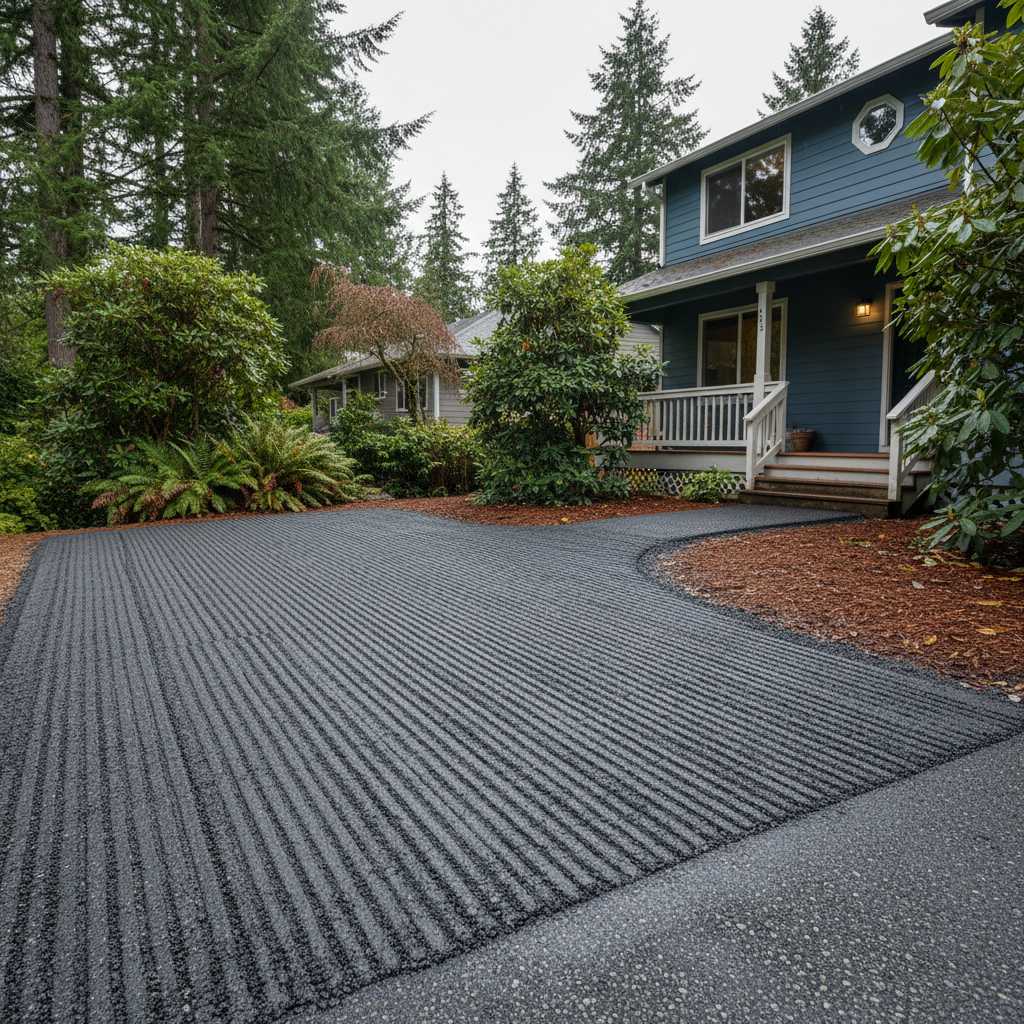
You just had your driveway or parking lot milled down and fresh material laid, or maybe you went with a compacted recycled millings surface. Either way, you are dealing with a fresh slate. If you live up around Ballard or down in West Seattle, you already know what our local weather does to pavement. We get months of relentless dampness, freezing nights in the foothills, and then sudden bursts of summer heat that bake the aggregate. Asphalt milling is a rugged, cost-effective way to reset your surface, but it still demands upkeep if you want it to last more than a couple of seasons.
Drainage is enemy number one around here. Seattle slope-heavy neighborhoods mean water loves to pool where it shouldn't, washing away binder and loosening the aggregate. Make sure your downspouts are not dumping roof runoff right onto the edge of your new surface. Keep your French drains and catch basins clear of pine needles and moss. If water can escape quickly, your asphalt stays solid.
Regular maintenance on milled asphalt is not complicated, but you have to stay ahead of it. Do not wait for potholes to swallow your car bumper. Walk your property a couple of times a year, especially right after the heavy winter rains ease up in April or May. Sweep away accumulated organic debris like wet maple leaves that trap moisture against the stone. If you used loose millings, you will need to drag or grade the surface occasionally to redistribute the aggregate that car tires push to the edges.
Keep an eye out for specific warning signs that tell you trouble is brewing. If you notice rutting where tires track every day, or if the edges start crumbling away because there is no solid curb support, you need to act fast. Alligator cracking, where the surface looks like a turtle shell, means the base underneath has failed. That is not going to fix itself with a quick sweep or a wish.
When should you call in a professional instead of trying to shovel more gravel into a depression? Coastal Paving Solutions gets called out all the time after a homeowner spends a weekend trying to patch a major sub-base failure with bagged cold patch from the hardware store. If you have standing water that will not drain, severe sub-grade settling, or large areas where the millings are completely washing away during a heavy downpour, it is time to bring in heavy equipment and someone who understands proper grading. A quick regrading or a professional shot of tack coat and fresh overlay can save you from a complete tear-out down the road.