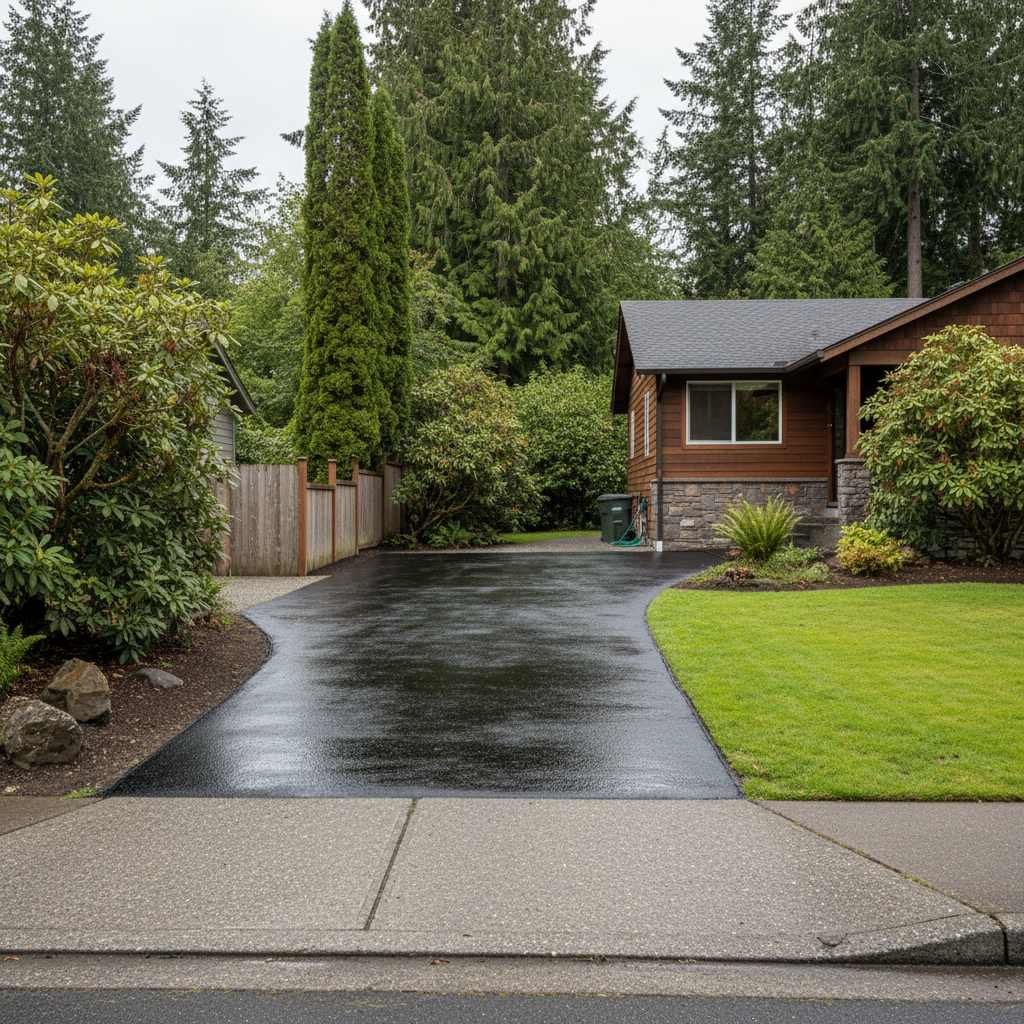
Alright, let's talk sealcoating. It's one of those things that seems pretty straightforward, right? You put a protective layer on your asphalt, it looks good, and it lasts longer. Simple. But I've seen homeowners in Seattle make some pretty common mistakes when they're planning or hiring for a sealcoating job, and frankly, it often leads to regret. You don't want that.
Mistake #1: Thinking All Sealants Are the Same (They're Not)
This is a big one. You might see a low bid and think, 'Great, I'm saving money!' But what kind of sealant are they using? There are different types out there, and they're not all created equal, especially when you're dealing with Seattle's weather. Some contractors will use a cheap, watered-down product that looks okay for a few weeks, but it won't hold up. It'll fade fast, crack, and basically just waste your money.
You want to ask about the type of sealant. Is it coal tar emulsion? Asphalt emulsion? Acrylic? What's the mix ratio? A good contractor won't hesitate to tell you and explain why they use what they use. For our climate, with all the rain and freeze-thaw cycles we get, especially in places like West Seattle or up on Queen Anne Hill, you need something robust. A quality, concentrated product with the right additives will give you the protection and longevity you're paying for. Don't just assume 'sealant is sealant.'
Mistake #2: Not Prepping the Surface Properly
This is probably the most overlooked step, and it's absolutely critical. Sealcoating isn't just painting over dirt. If your driveway isn't clean – and I mean really clean – the sealant won't adhere properly. I've seen jobs where contractors just blow off some leaves and call it good. That's a recipe for peeling and premature failure.
Before any sealant goes down, the surface needs to be free of all loose debris, oil spots, dirt, and any previous flaking sealant. Oil and grease spots need to be primed or treated, otherwise, the new sealant won't stick. Cracks need to be filled and allowed to cure. If there's moss or algae, which is common around here, that needs to be thoroughly cleaned off. If a contractor tries to skip these steps or rushes through them, that's a huge red flag. You'll end up with a patchy, short-lived finish.
Mistake #3: Ignoring the Weather Forecast
This might seem obvious, but you'd be surprised. Sealant needs specific conditions to cure properly. It can't be too cold, it can't be too hot, and it definitely can't rain shortly after application. In Seattle, that last one is a constant battle. If it rains before the sealant has fully cured, it can wash away, streak, or just not bond correctly. You'll get a milky, uneven finish that won't protect anything.
A good contractor, like us at Coastal Paving Solutions, will always check the forecast. We're looking for a good window of dry weather, ideally with temperatures above 50°F (10°C) for at least 24-48 hours after application. If someone wants to sealcoat your driveway when there's a 50% chance of rain later that day, politely decline. It's not worth the risk. It's better to wait for the right conditions than to rush it and have to do it all over again.
Mistake #4: Not Understanding the Curing Time
Once the sealant is down, it's not instantly ready for traffic. It needs time to cure. Most sealants need at least 24-48 hours before you can drive on them, and sometimes longer depending on the product and weather. Walking on it too soon, or worse, driving on it, will leave tire marks, scuffs, and can even pull the sealant right off the surface. It's like painting a wall and then leaning on it before it's dry – you'll mess it up.
Make sure you get clear instructions on how long to stay off your driveway. If a contractor tells you it's fine to drive on it in just a few hours, they're either using a very specific fast-cure product (which is rare for standard sealcoating) or they're giving you bad advice. Patience is key here. A little inconvenience for a couple of days means a much better, longer-lasting result.
Mistake #5: Not Asking About Experience and References
You wouldn't hire a brain surgeon without checking their credentials, right? Same principle applies here. Anyone can buy a bucket of sealant and a squeegee. But a professional knows the nuances: the right application techniques, how to handle different asphalt conditions, and how to troubleshoot issues. Don't just go with the cheapest guy who knocks on your door.
Ask how long they've been doing this. Ask for references, and actually call them. Look at examples of their work. A reputable company will be happy to provide this. You're investing in the longevity of your driveway, so you want someone who knows what they're doing and stands behind their work. It's your property, and you deserve a quality job.
Avoiding these common mistakes will save you a lot of headaches and ensure your sealcoating project actually protects your investment for years to come. Do your homework, ask the right questions, and don't cut corners where it counts.