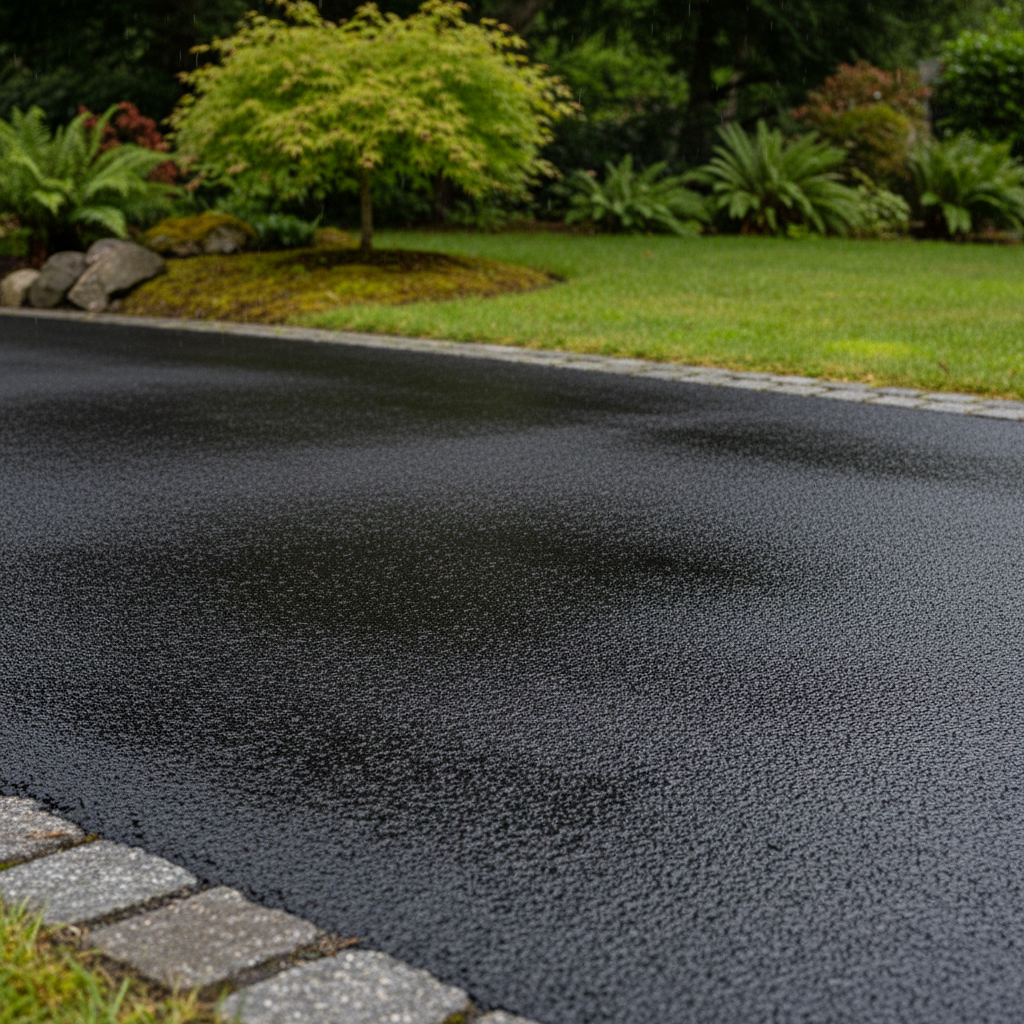
Alright, let's talk sealcoating. Folks all over Seattle, from Queen Anne to West Seattle, ask me about this a lot. There's tons of information out there, and honestly, some of it's just plain wrong or just trying to sell you something you don't really need. So, I figured I'd tackle the most common questions I hear, straight up, no fluff.
What exactly is sealcoating, and why would I need it?
Think of sealcoating like sunscreen and a protective topcoat for your asphalt. It's a liquid layer, usually made from coal tar or an asphalt emulsion, that we spread over your existing pavement. What it does is pretty simple, but super important: it seals up those tiny cracks, fills in small voids, and creates a barrier against the elements. Here in Seattle, with all our rain, that's a really big deal. Water is asphalt's worst enemy, you know? It seeps into those tiny cracks, freezes, expands, and then — boom — you've got potholes and bigger cracks. UV rays from the sun also break down the binders in the asphalt, making it brittle. Sealcoat protects against both of these, slowing down that deterioration and keeping your driveway looking good and lasting longer.
How often should I sealcoat my driveway?
This is probably the question I get asked most often, and there isn't a single answer that fits everyone. Generally, for a residential driveway, you're looking at every 2 to 3 years. The first time you sealcoat a brand new driveway, you should actually wait at least 6-12 months for the asphalt to fully cure and off-gas. After that, it depends on a few things: how much sun your driveway gets, how much traffic it sees, and if you've got any trees dropping sap or leaves that hold moisture. If your driveway looks dull, faded, or you're starting to see a lot of small hairline cracks, it's probably time. Don't wait until you have big cracks or potholes; that's when you're looking at repairs, not just maintenance.
What's the best time of year to get it done in Seattle?
You need warm, dry weather for sealcoating to cure properly. That means here in Seattle, our window is usually late spring through early fall. Think May through September, maybe early October if we get a nice dry spell. You need at least 24 hours, ideally 48, of consistent temperatures above 50°F (10°C) with no rain in the forecast. Trying to sealcoat in November? You're just asking for trouble. It won't cure right, it'll track, and it'll peel. We've seen it happen. Coastal Paving Solutions always keeps a close eye on the forecast to make sure we're applying it under optimal conditions.
Can I just do it myself to save money?
You can, sure. There are DIY kits available at hardware stores. But here's the honest truth: it's a messy, labor-intensive job, and getting a professional, even finish is harder than it looks. You need to properly clean the surface, treat oil spots, fill cracks, and then apply the sealcoat evenly without puddling. If you don't prep right, it won't stick. If you apply it too thick, it'll crack. Too thin, and it won't protect. Plus, the commercial-grade sealants we use are generally higher quality and last longer than what you'll find off the shelf. For a small patch job, maybe. For your whole driveway? I'd recommend leaving it to the pros. You'll get a better, longer-lasting result.
How long does it take to dry, and when can I drive on it?
This is critical. After we apply sealcoat, it needs time to cure. You'll typically need to stay off your driveway for at least 24-48 hours. The exact time depends on the temperature, humidity, and how much sun it's getting. If it's a cooler, cloudy day, it'll take longer. We always advise clients to err on the side of caution. Driving on it too soon can leave tire marks, scuff the new surface, and compromise the sealcoat's effectiveness. It's an inconvenience for a day or two, but it pays off in the long run.
Will sealcoating fix existing cracks or potholes?
No, not really. This is a common misconception. Sealcoating is a preventative maintenance measure, not a repair solution for major damage. It'll fill tiny hairline cracks and make small imperfections less noticeable, but it won't fix structural issues. If you have significant cracks (wider than a quarter-inch) or potholes, those need to be repaired before we apply sealcoat. Think of it like painting a wall; you wouldn't just paint over a big hole, you'd patch it first. We'll always inspect your driveway and recommend any necessary repairs before we even think about sealcoating.
Hopefully, that clears up some of the mystery around sealcoating. It's a smart investment for your asphalt, especially with our Seattle weather, but you want to make sure you're doing it right and at the right time. If you've got more questions, or you're ready for an estimate, give us a shout at Coastal Paving Solutions.