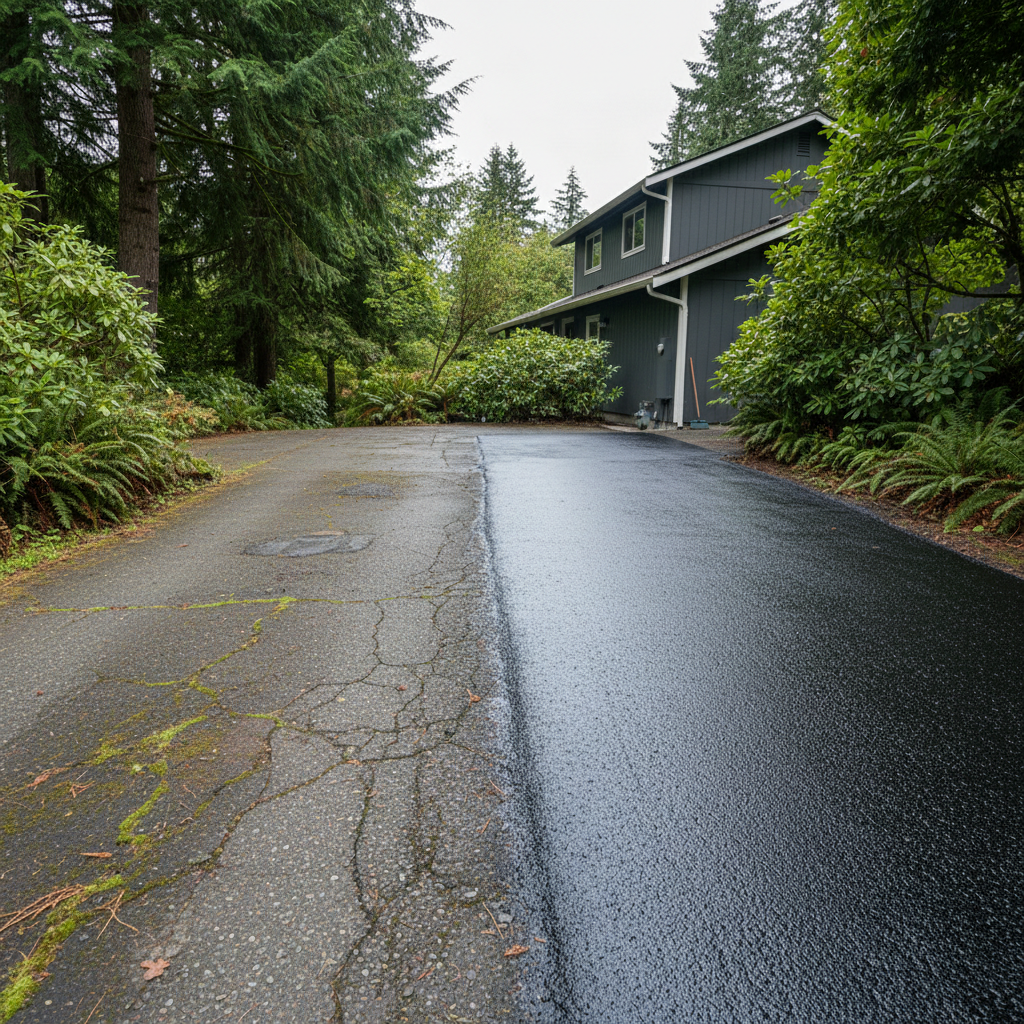
Alright, let's talk about keeping your driveway in good shape. You've got options when it comes to sealing it, and two common ones I get asked about a lot are slurry seal and asphalt emulsion. People often use these terms interchangeably, but they're not the same thing. Knowing the difference can save you headaches and money down the line, especially with our Seattle weather doing its best to wear everything down.
What's the Deal with Asphalt Emulsion?
First up, asphalt emulsion. This is what most folks think of when they hear 'driveway sealer.' It's basically liquid asphalt, water, and an emulsifying agent that helps it all mix. When you apply it, the water evaporates, and you're left with a thin layer of asphalt protecting your pavement. Think of it like painting your driveway.
It's pretty easy to apply, and you can even find it at hardware stores if you're a DIY type. It's also the cheaper option upfront, which is why it's so popular. You'll see it used a lot on residential driveways around places like Ballard or West Seattle.
The Pros and Cons of Asphalt Emulsion:
- Cost: Definitely the more budget-friendly choice initially.
- Appearance: Gives your driveway a nice, fresh black look. It's purely aesthetic, though.
- Maintenance: You'll need to reapply this stuff more often, usually every 1-3 years, depending on traffic and how much sun and rain it gets.
- Durability: This is where it falls short. It's a thin, surface-level coating. It doesn't add structural integrity or fill cracks effectively. It's more of a sacrificial layer against UV rays and minor water penetration. It's not going to do much for a driveway that's already got significant cracking or wear.
Now, Let's Talk Slurry Seal
Slurry seal is a whole different animal. This isn't just liquid asphalt. It's a mix of asphalt emulsion, fine aggregates (think tiny crushed rock or sand), water, and some chemical additives. It's a much thicker, more robust application. We're talking about a significant layer that actually fills minor surface imperfections and provides a new wearing course.
You won't be picking this up at Home Depot. It requires specialized equipment to mix and apply correctly, which means you'll need a professional outfit like Coastal Paving Solutions to do the job right. It's more commonly used on roads, parking lots, and commercial properties, but it's a fantastic option for residential driveways that need more than just a cosmetic touch-up.
The Pros and Cons of Slurry Seal:
- Cost: Higher upfront cost than asphalt emulsion, no doubt about it. But remember, you get what you pay for.
- Appearance: It gives a uniform, dark finish, but because of the aggregates, it has a slightly coarser texture than emulsion. It looks very professional and clean.
- Maintenance: This is where you start seeing the long-term value. A properly applied slurry seal can last 5-10 years, sometimes even longer, before needing reapplication. That means less frequent work for you.
- Durability: This is its biggest strength. It's a much thicker, more durable layer that actually adds structural integrity to your pavement. It fills small cracks and voids, protecting the underlying asphalt from water intrusion and oxidation. It stands up way better to heavy traffic and our constant drizzle here in the Puget Sound region.
Which One Should You Choose for Your Seattle Driveway?
Okay, so you've got the rundown. Which one makes sense for you?
If your driveway is relatively new, in excellent condition, and you're just looking for a quick, cheap way to make it look fresh and offer minimal protection, then asphalt emulsion might be okay. Just be prepared to reapply it often.
However, if your driveway is showing its age, has a few minor cracks, or you just want a much more durable, long-lasting solution that offers real protection against our wet Seattle winters and the general wear and tear, then slurry seal is absolutely the way to go. It's a bigger investment upfront, but it pays off in longevity and superior protection. You'll spend less time and money over the long haul compared to constantly reapplying a thin emulsion coat.
For most homeowners in Seattle, especially with the amount of rain we get and the freeze-thaw cycles that can slowly wreck pavement, I almost always recommend slurry seal for its superior durability and protection. It's a more robust solution that handles our climate better. It's not just about making it look good; it's about extending the life of your asphalt and preventing more expensive repairs down the road. Give us a call at Coastal Paving Solutions if you want to talk specifics about your driveway.