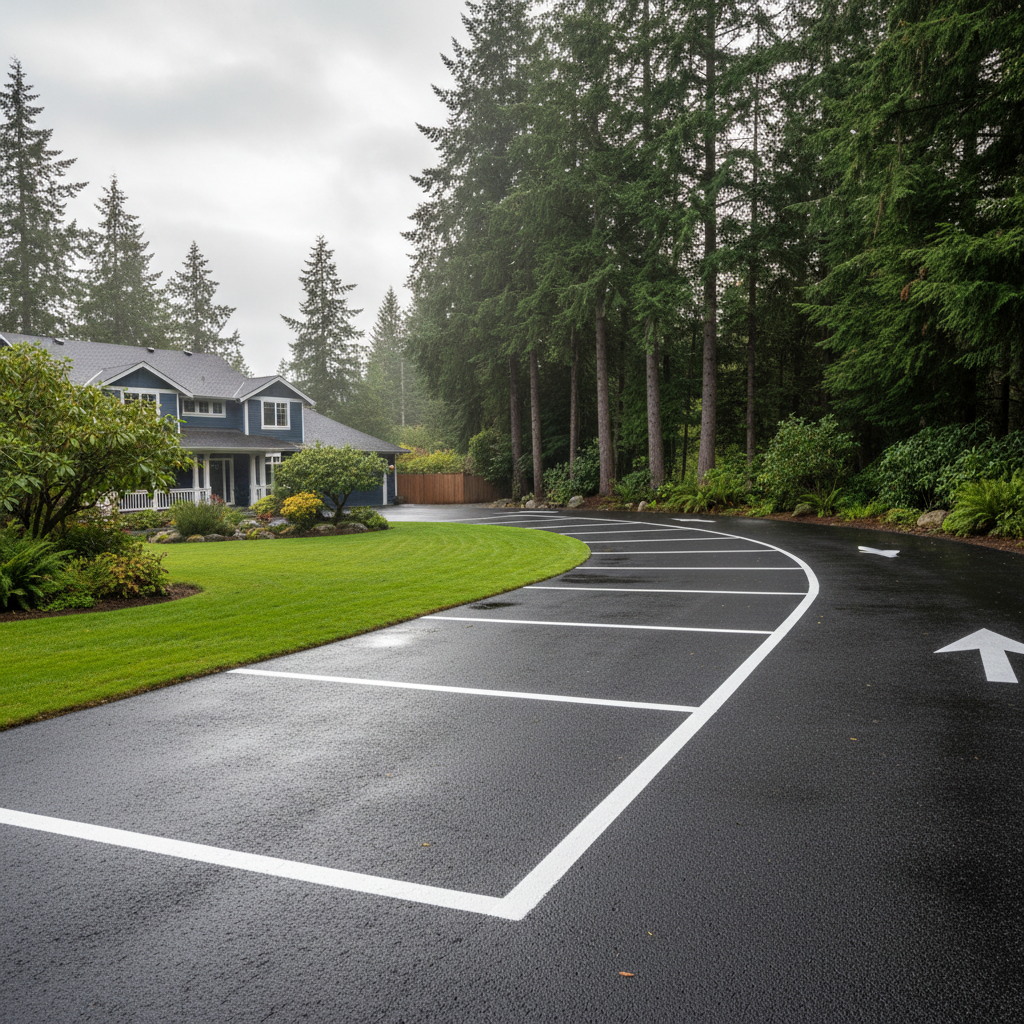
You've got a fresh asphalt driveway or parking lot, and now it's time for striping. Seems simple enough, right? Just get some paint down. Well, I've seen enough striping jobs go sideways over the years, especially here in Seattle, to tell you it's not always as straightforward as it looks. Homeowners often make a few key mistakes that can lead to wasted money, a shoddy appearance, and even safety hazards. Let's talk about what to watch out for.
Mistake #1: Not Understanding Your Needs (or Local Regulations)
This is probably the biggest one. People often jump straight to getting quotes without really thinking about what they need the striping for. Is it just a simple parking spot for your RV? Or are you marking out a shared driveway with specific traffic flow? Do you need handicap-accessible spots? Here in Seattle, especially if you're in a more urban area like Capitol Hill or Ballard, there are specific ADA requirements for parking lot striping that you absolutely can't ignore if it's a commercial or multi-unit residential property. Even for a private residence, thinking about how you and your guests will use the space is crucial. Don't just assume a standard layout will work for your unique situation.
Mistake #2: Hiring the Cheapest Bid Without Asking Questions
Look, I get it. Everyone wants to save a buck. But when it comes to asphalt striping, the cheapest bid can often be the most expensive in the long run. I've seen folks get quotes that are suspiciously low, and it's usually for a reason. They might be using cheap, thin paint that fades in six months, or they're not properly prepping the surface. Our Seattle weather, with all its rain and temperature swings, is tough on pavement markings. You need quality materials that can stand up to it. Ask prospective contractors about the type of paint they use – is it a durable, traffic-grade paint? How many coats do they apply? What's their warranty on the striping itself? If they can't answer these questions clearly, that's a red flag. Coastal Paving Solutions always uses high-quality, long-lasting materials because we know you don't want to redo this every year.
Mistake #3: Neglecting Surface Prep
This goes hand-in-hand with the cheap bid problem. Good striping starts with good surface prep. If your asphalt isn't clean and dry, that paint isn't going to stick properly. I'm talking about sweeping away all the dirt, leaves, and debris. If there's oil or grease spots, they need to be cleaned thoroughly. Any loose aggregate needs to go. If the surface is damp from a recent Seattle drizzle, the paint won't cure right, and it'll peel off in no time. A reputable contractor will factor this prep work into their process and won't cut corners. If someone says they can just come out and paint without any cleaning, politely show them the door.
Mistake #4: Not Considering Drainage and Water Flow
This is a subtle one, but it's important. When you're planning your striping, think about where water collects on your asphalt. If you're painting lines right through a low spot where puddles always form, those lines are going to wear out much faster. The constant standing water and freeze-thaw cycles we get here in the Pacific Northwest will break down the paint. While striping won't fix a drainage problem, being mindful of it can help you place your markings in areas that will see less abuse from pooling water, extending their lifespan.
Mistake #5: Poor Layout and Measurement
You want your lines to be straight, consistent, and spaced correctly, right? It sounds obvious, but I've seen plenty of DIY attempts and even some less-than-professional jobs where lines are wavy, uneven, or just plain wrong. This isn't just about aesthetics; it's about functionality and safety. If parking spots are too narrow, people can't open their car doors. If traffic flow arrows are confusing, you're asking for fender benders. A professional will use proper measuring tools, chalk lines, and stencils to ensure everything is precise and up to code. Don't underestimate the skill involved in getting a layout just right.
Mistake #6: Rushing the Job or Not Allowing Proper Curing Time
Asphalt striping isn't an instant gratification project. The paint needs time to cure. If you drive or walk on it too soon, you'll track paint, smudge lines, and ruin the job. Your contractor should give you clear instructions on how long to stay off the freshly striped area. This can vary depending on the type of paint used and the weather conditions – a cooler, humid Seattle day will mean a longer drying time than a warm, dry one. Be patient. It's worth the wait for a crisp, durable finish.
By avoiding these common pitfalls, you'll end up with a striping job that not only looks good but also lasts. Do your homework, ask the right questions, and don't be afraid to invest in quality. You'll be glad you did.